The Essential Guide to External Grooving Tool Holders: Principles, Selection and Application
In the precision-driven world of CNC machining, the External Grooving Tool Holder stands as a critical component that bridges cutting inserts and machine spindles, directly influencing grooving accuracy, surface finish, and processing efficiency. For both seasoned machinists and industry newcomers, mastering the knowledge of this tooling essential is key to optimizing external grooving operations.
Core Structure and Working Mechanism
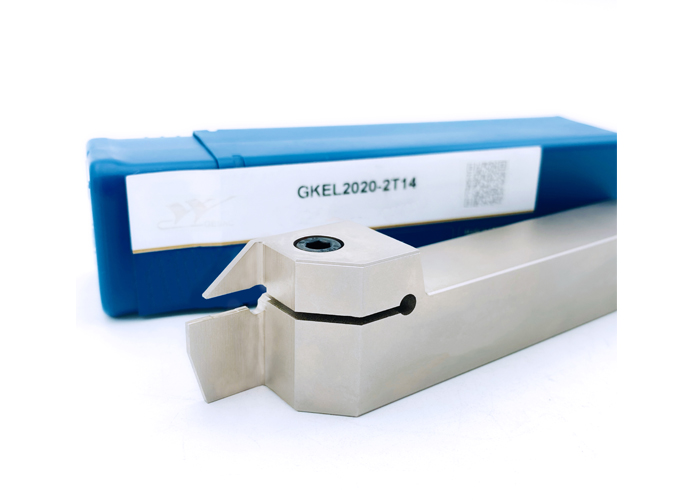
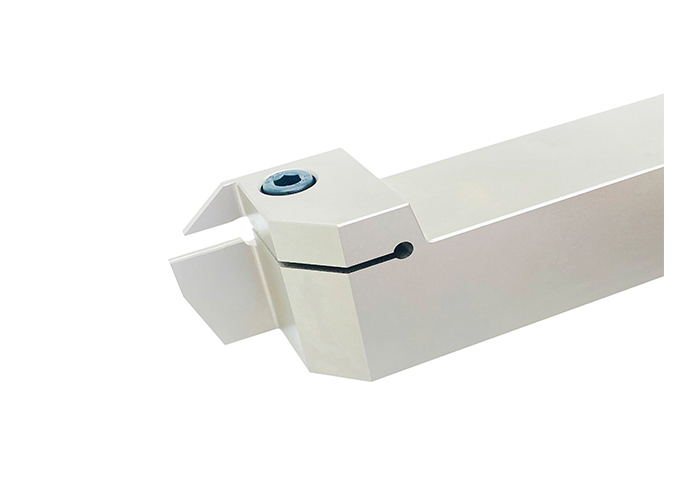
An External Grooving Tool Holder typically consists of three integral parts: the shank, the clamping system, and the tool post interface. The shank, engineered to match the machine tool’s turret or tool rest, ensures stable force transmission during high-speed rotation. The clamping system—commonly adopting screw compression or wedge-type designs—secures the grooving insert tightly to prevent displacement under cutting forces. The tool post interface, adhering to international standards like ISO or BT, guarantees compatibility with diverse CNC lathes and turning centers.
Its working principle revolves around precise force distribution: when the machine tool drives the holder, the insert’s cutting edge engages with the workpiece’s external surface, and the holder’s rigid structure absorbs radial and axial cutting forces, maintaining consistent grooving depth and width. Unlike general turning tool holders, External Grooving Tool Holders feature a more compact front-end design to access narrow grooving positions while avoiding interference with the workpiece.
Key Selection Criteria
Selecting the right External Grooving Tool Holder requires comprehensive consideration of four factors:
1. Workpiece Material and Groove Parameters: For high-strength alloys (e.g., titanium alloy), choose holders with enhanced rigidity to resist vibration; for shallow, wide grooves, opt for holders with extended cutting edge support.
2. Machine Tool Compatibility: Match the holder’s shank size and interface type to the machine’s turret capacity—small CNC lathes often use 20mm or 25mm shank holders, while heavy-duty machines require 32mm or larger.
3. Cutting Conditions: High-speed grooving demands holders with excellent heat dissipation, while interrupted cutting necessitates reinforced clamping systems.
4. Insert Matching: Ensure the holder’s pocket size and angle align with the selected grooving insert (e.g., carbide, cermet) to maximize cutting performance.
Operational Best Practices and Maintenance
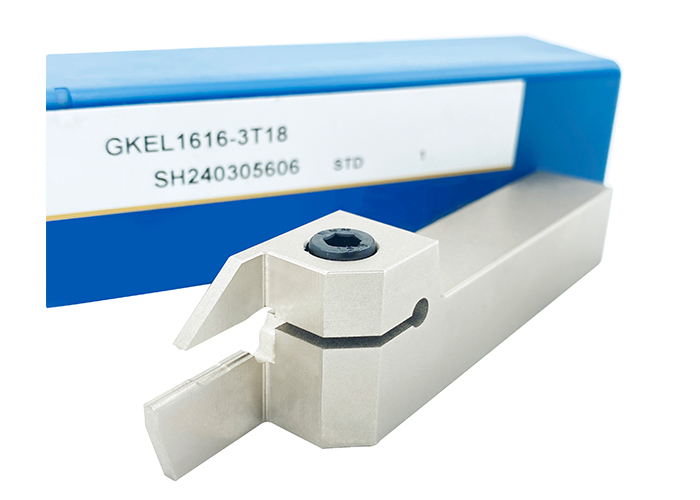
Proper operation of External Grooving Tool Holders is vital for extending tool life and ensuring machining quality. First, perform precise tool setting to guarantee accurate grooving position—utilize tool presetters to calibrate the holder’s X and Z axes offsets. During machining, control the cutting speed and feed rate based on workpiece material: for steel, a speed of 100-150m/min and feed of 0.05-0.1mm/rev is recommended, while aluminum allows higher speeds (200-300m/min) with lower feed.
Regular maintenance preserves holder performance. After each shift, clean chips and coolant residue from the clamping system to prevent corrosion; inspect the clamping screws for tightness weekly, as loose screws can cause insert movement. Every 3-6 months, check the holder’s shank and interface for wear—replace worn holders promptly to avoid machining errors. Additionally, store External Grooving Tool Holders in dedicated racks to prevent collision damage to the clamping surfaces.
Conclusion
The External Grooving Tool Holder is far more than a simple "tool carrier"—it is a precision component that integrates structural mechanics and machining dynamics. By understanding its working mechanism, mastering selection criteria, and adhering to operational and maintenance standards, manufacturers can significantly improve external grooving efficiency, reduce tool costs, and achieve higher precision in CNC machining processes. As machining technology advances, the External Grooving Tool Holder will continue to evolve with features like integrated coolant channels and intelligent wear monitoring, further empowering the manufacturing industry.